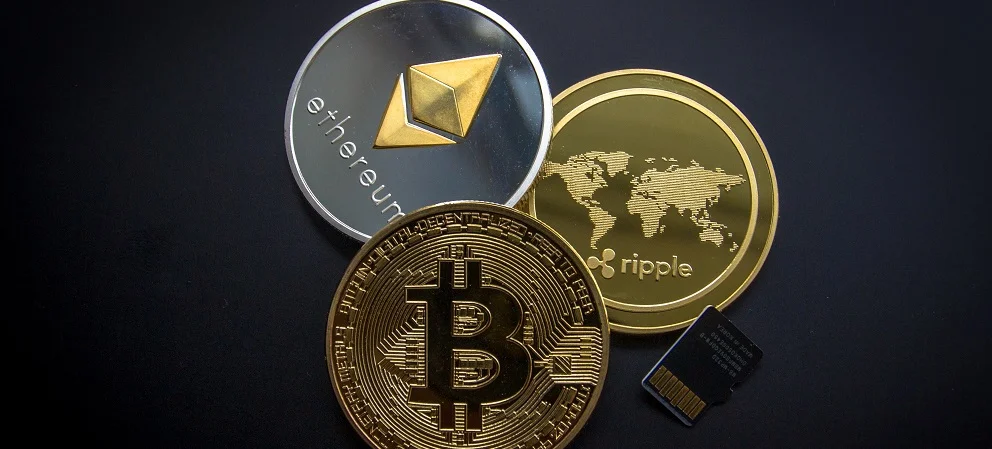
The present definition of cryptocurrencies terms them as “digital representation of value” not issued by a central Buy Hump Token bank or another public authority and accepted by natural or legal persons as means of payment. Cryptocurrencies can be stored, transferred, or traded electronically. However, in most countries, they are not considered currencies in the traditional sense.
Also, besides their function as a medium of exchange (in the form of digital money) and a store of value, cryptocurrencies are products with market value. Thanks to the potential of blockchain technology, a vast range of use cases beyond conventional financial transactions are emerging as the number of applications is increasing at unprecedented rates.
While in many of those regions economies are still largely cash-driven and people cannot afford to pay for transportation to visit banks for registration, the number of those who have access to or own mobile phones is increasing. Thus, using digital wallets to transfer Bitcoin independent of traditional banks may provide a viable alternative for people without a bank account to participate in finance and to create a store of value.
Ethereum – a decentralised network for applications and smart contracts
Bitcoin may have started the cryptocurrency revolution all but it was Ethereum that pushed cryptocurrencies into a true industry. Thanks to Ethereum’s unofficial status as the “world computer” for decentralised applications (DApps), the popularisation of smart contracts and introduction of the ERC20 standard for tokens, the Ethereum network currently provides the world’s leading platform for distributed computing.
IOTA – connecting services and resources in the IoT
The IOTA project behind the Tangle, an open-source distributed ledger, has the objective of creating an environment in which machines trade services and resources with each other. One use case for IOTA which is already underway in real life, is IOTA’s partnership with a prominent car manufacturer to test employing “smart wallet” technology in the scope of connected car services.
Asset-backed tokens – digitising precious metals
In contrast to utility tokens, asset-backed tokens have intrinsic value that is directly linked to the physical asset backing up the token. The tokenisation of assets enhances the liquidity of real world assets in the markets.
The term “liquidity” in this case implies how quickly and easily an asset can be bought and sold. By digitising a real world asset like real estate or a car, purchase processes are much quicker and easier.
Digitising assets also opens up markets to those investors that may not have been able to participate in investing until now. While traditional financial institutions more often than not bar clients with insufficient funds from making investments, tokenisation of a physical asset allows for a very high degree of fractionalisation – meaning that an asset is divided into numerous small parts.
Tether – pegging cryptocurrencies to fiat
Stablecoins were established with the purpose to eliminate the volatility of traditional cryptocurrencies by consistently holding a stable value. In most cases, one unit of a stablecoin is “pegged” at the value of one US dollar or the Japanese yen (fiat-backed).
However, a stablecoin may also be pegged to another cryptocurrency (crypto-backed) or to other real-world assets (commodity-backed). The fiat currency or asset backing up a stable coin is optimally held by a regulated financial entity.
 Site Title
Leave a comment